
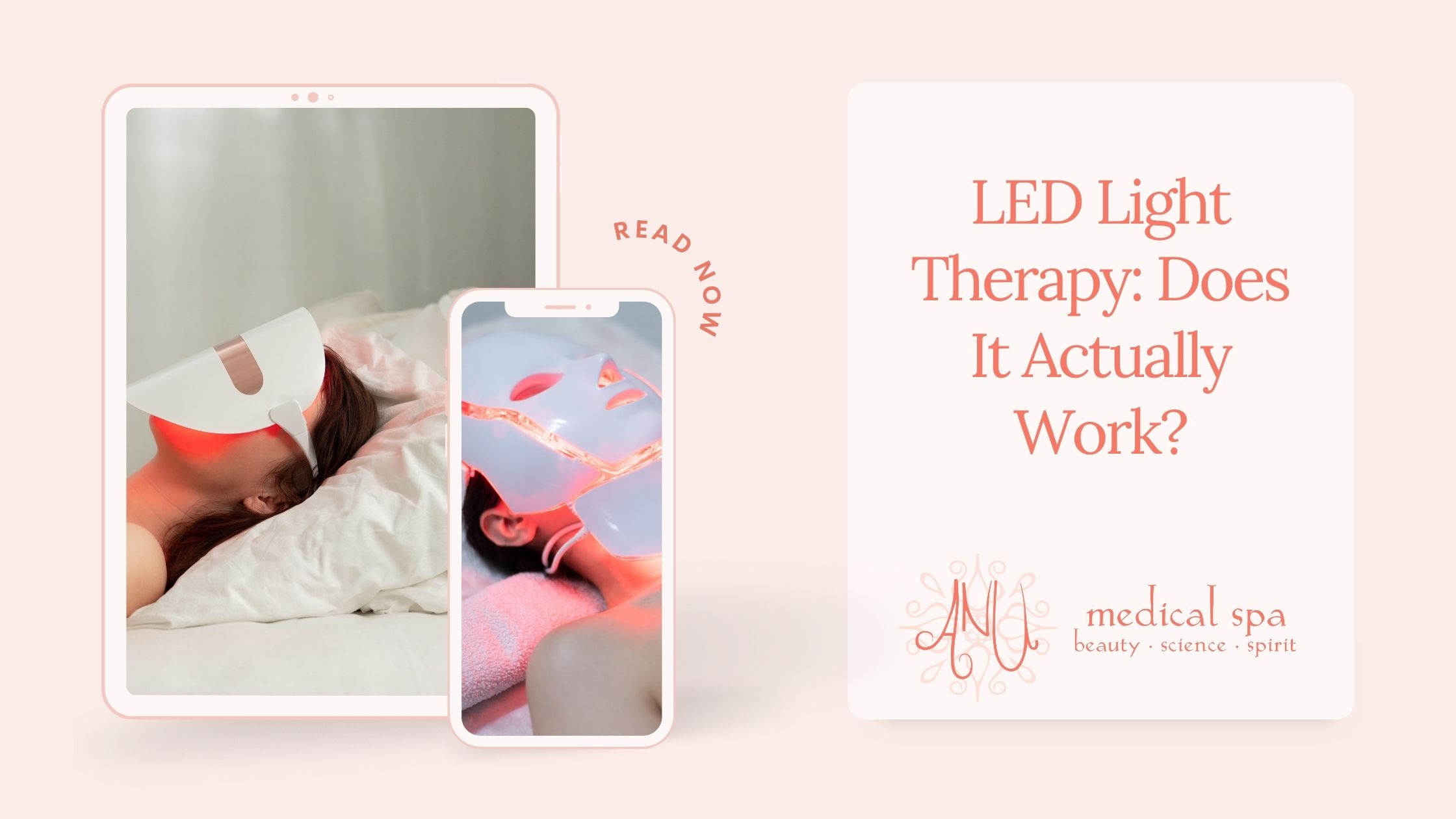
LED masks and in-spa light therapy have exploded in popularity—but do they really deliver the results they promise? The answer is yes. LED therapy has become a go-to treatment for both acne and anti-aging, offering a non-invasive, painless solution with zero downtime.
What Is LED Light Therapy?
LED light therapy is a treatment that uses specific wavelengths of light to target skin concerns. It’s entirely non-invasive, painless, and safe for nearly all skin types. Originally developed for wound healing in medical settings, LED has since become a staple in professional skincare. Different wavelengths of light penetrate the skin at varying depths, triggering natural processes that improve skin texture, reduce inflammation, and combat acne-causing bacteria.
Red Light Therapy
What Red Light Targets
Red light targets a variety of skin concerns, including fine lines and wrinkles, loss of collagen, skin laxity, and inflammation or redness. By addressing these issues, red light helps promote a firmer, smoother, and more even-toned complexion.
How It Works
Red light penetrates the skin to stimulate fibroblasts, the cells responsible for producing collagen and elastin. This boosts skin firmness and elasticity while increasing circulation and promoting cellular repair. Red light also reduces inflammation, leaving your complexion calmer and healthier.
Who Benefits Most
Red light therapy is especially beneficial for those with aging or mature skin who want to restore firmness, as well as for clients with redness or sensitive skin. It also helps anyone seeking a smoother, brighter, and more even-toned complexion. Beyond daily skin concerns, red light is ideal for post-procedure healing, making it an excellent choice after facials, microneedling, or chemical peels.
Blue Light Therapy
What Blue Light Targets
Blue light targets common acne concerns, including acne-causing bacteria, congestion, clogged pores, and inflammation from active breakouts.
How It Works
Blue light works by destroying acne-causing bacteria on and below the skin’s surface. It also helps regulate oil production, minimizing active breakouts and preventing new ones from forming.
Who Benefits Most
Blue light therapy is particularly beneficial for acne-prone teens and adults, as well as clients with oily or congested skin. It’s an excellent option for anyone seeking a non-medication approach to acne and works best as a series of treatments for long-term breakout prevention and control.
Red vs. Blue Light: Which One Do You Need?
Red light is best for anti-aging and skin healing, while blue light is ideal for acne and inflammation control. Many clients benefit from dual treatments, which combine red and blue light to address multiple concerns simultaneously. This approach helps balance the skin, leaving it both clearer and more radiant.
What Results You Can Expect
- Timeline: Gradual improvement is typical with consistent treatments.
- Immediate effects: Skin looks calmer, more radiant, and refreshed.
- Long-term effects: Improved texture, fewer breakouts, stronger, healthier skin.
LED therapy works best when performed as a series or paired with other professional treatments, enhancing both short-term glow and long-term skin health.
Is LED Right for You?
LED therapy is suitable for most people, but a consultation can ensure you get the right light type for your skin goals.
- Who should consider it: Those with acne, fine lines, redness, or dullness.
- Who should consult first: Pregnant clients, individuals on certain medications, or those with epilepsy.
Conclusion
LED light therapy is safe, proven, and effective for both acne and anti-aging concerns. With zero downtime and visible improvements, it’s a versatile addition to any skincare routine.